
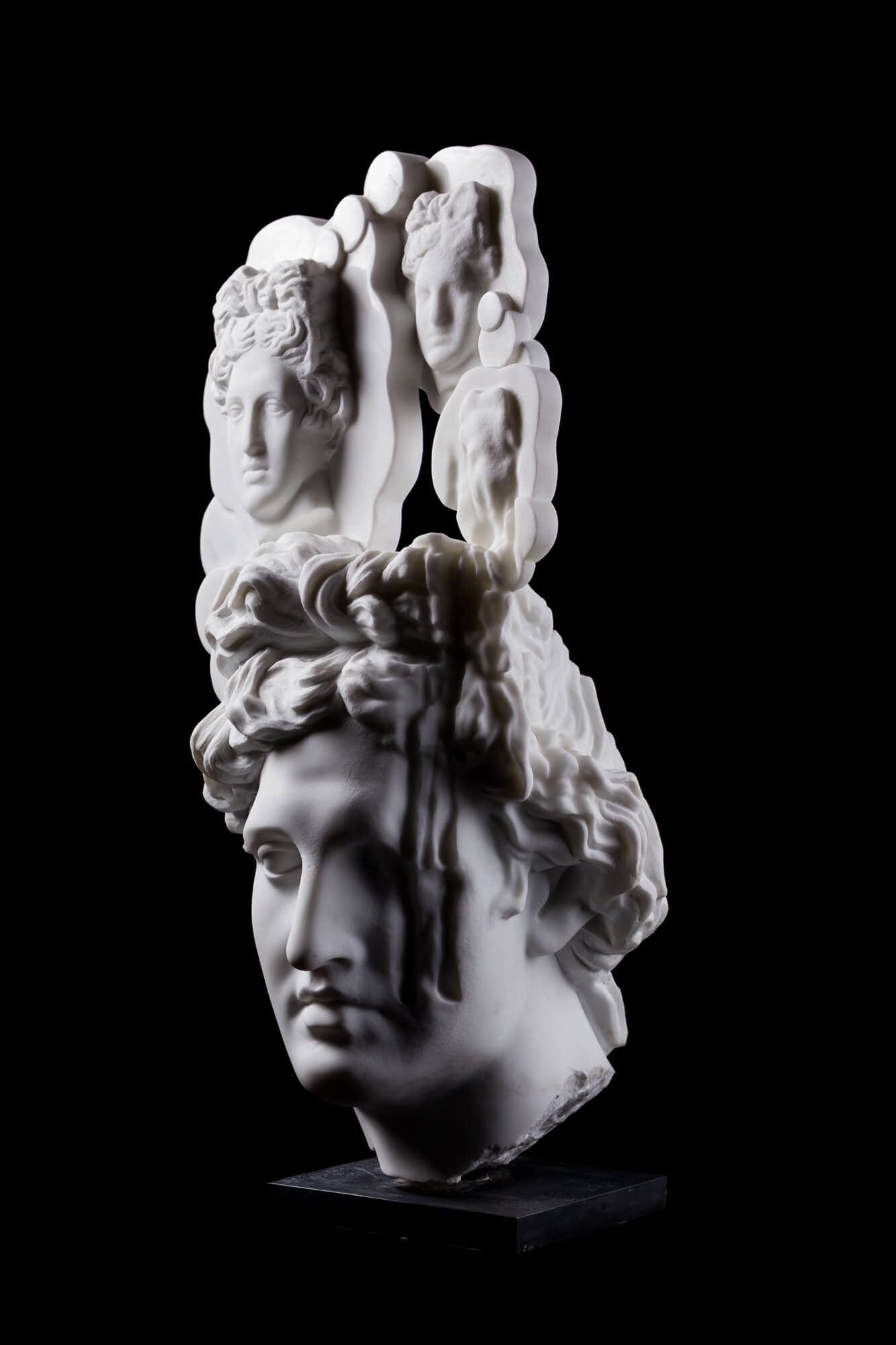
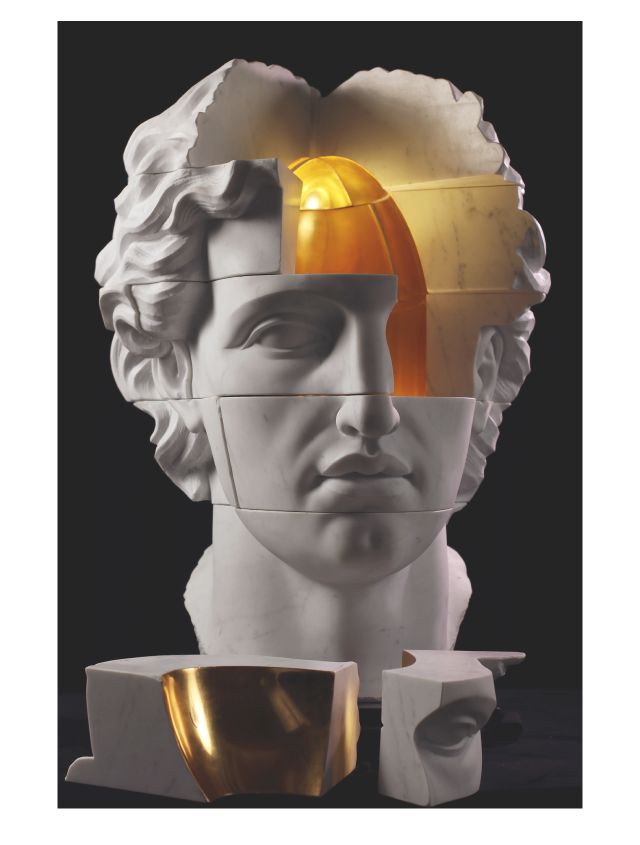
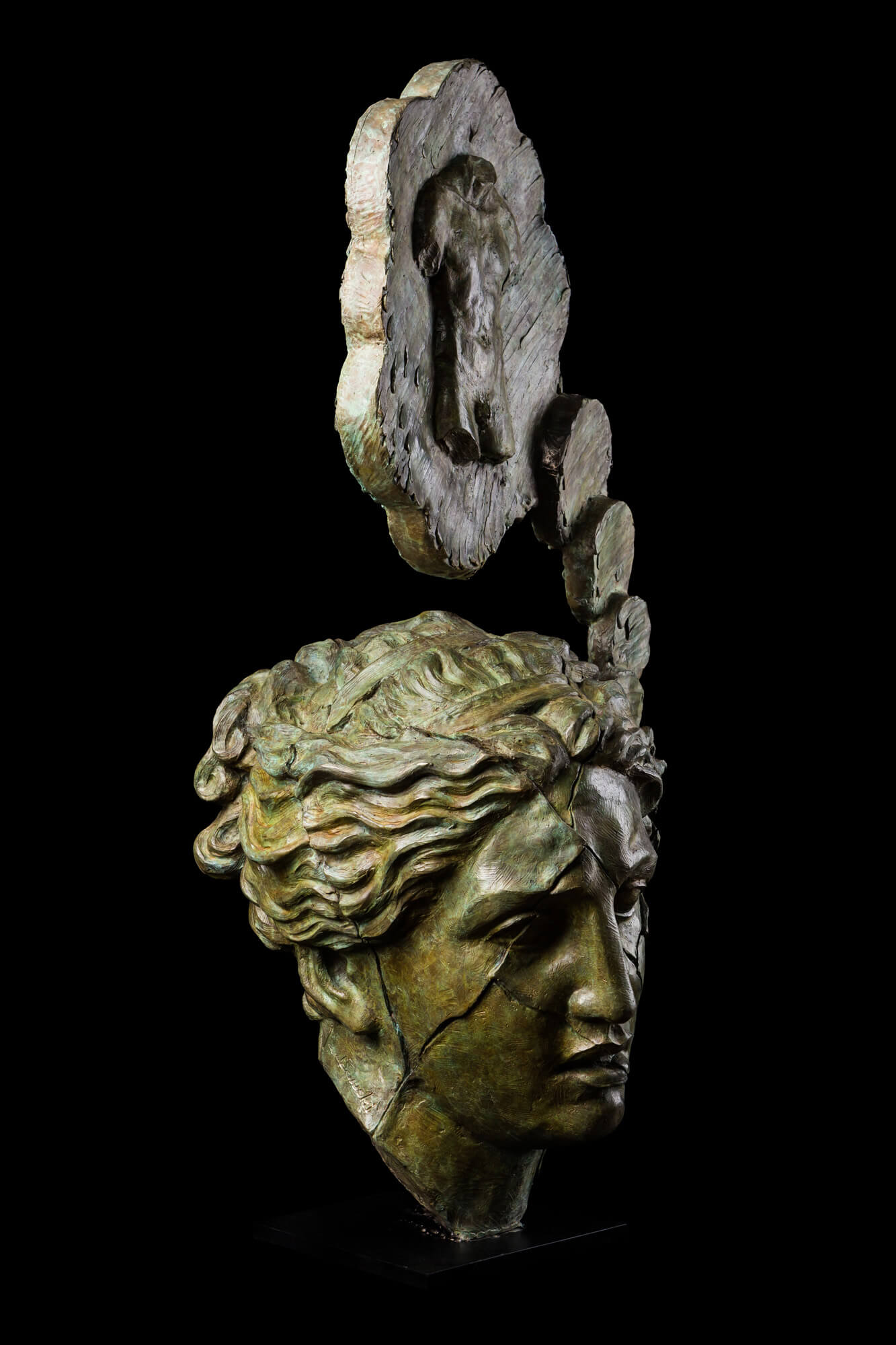
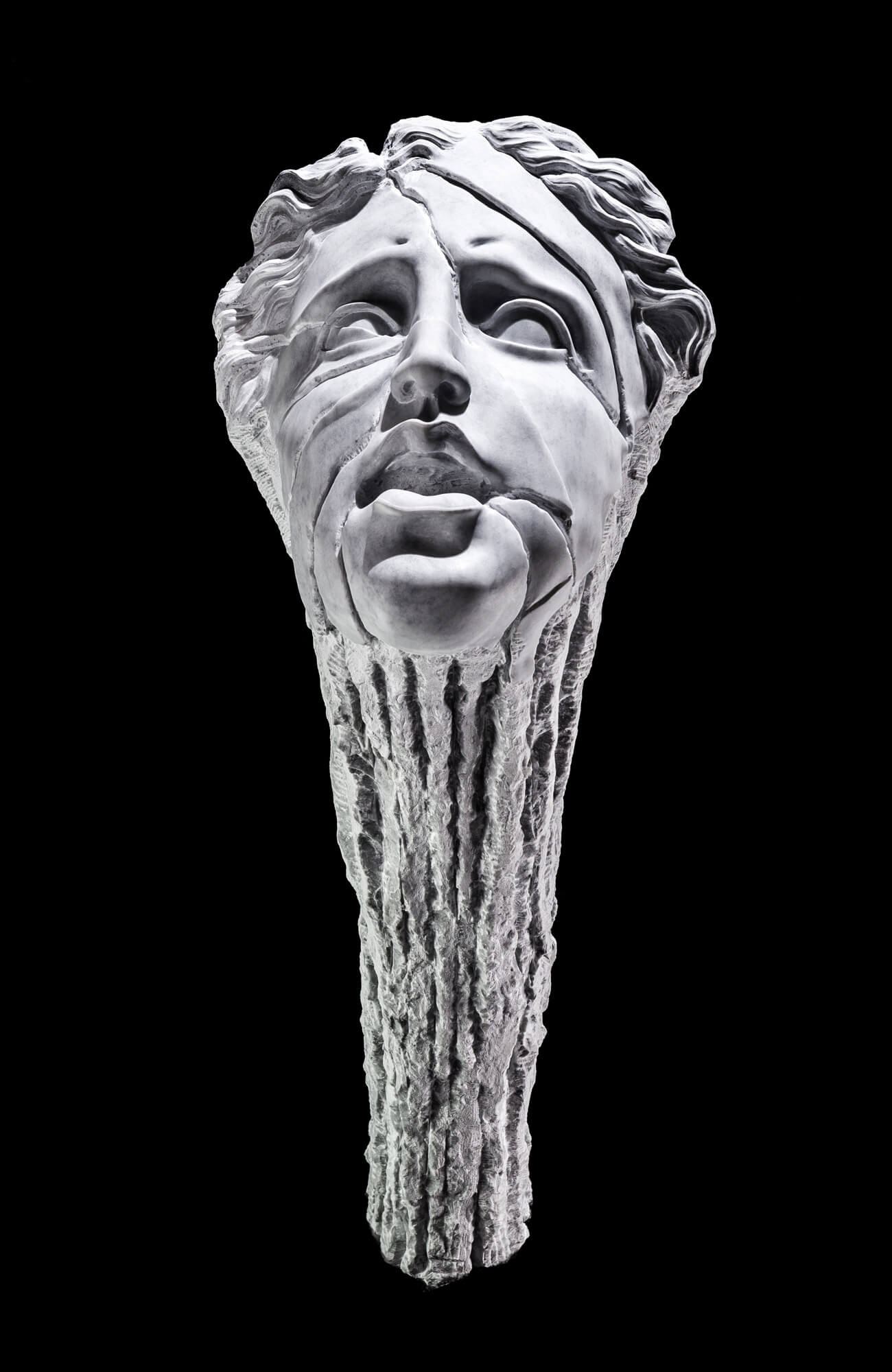
Does external beauty always guarantee internal beauty? What do you find most important in another person? Or perhaps there is nothing but emptiness in there? Maybe all that glitters is not gold…
Searching for beauty in another person is a great but also risky adventure. To check what is hidden behind the beautiful facade, we have to look inside by moving complicated puzzles. Will it end in success or in disintegration? What will we find there: truth, beauty or emptiness?
(Love Was Such Easy Game To Play)
„Yesterday, love was such an easy game to play”…
Can love pass away? Is it only a game of illusion? An easy game rather than an everlasting promise? Do you rebel against an opinion that love is only a short term play? Have all the important values become relative and impermanent?
Do you go into the same mainstream river with others? Do you appreciate what makes you different from others? Are you following the expectations and patterns of your times? Are you afraid of being unfashionable?
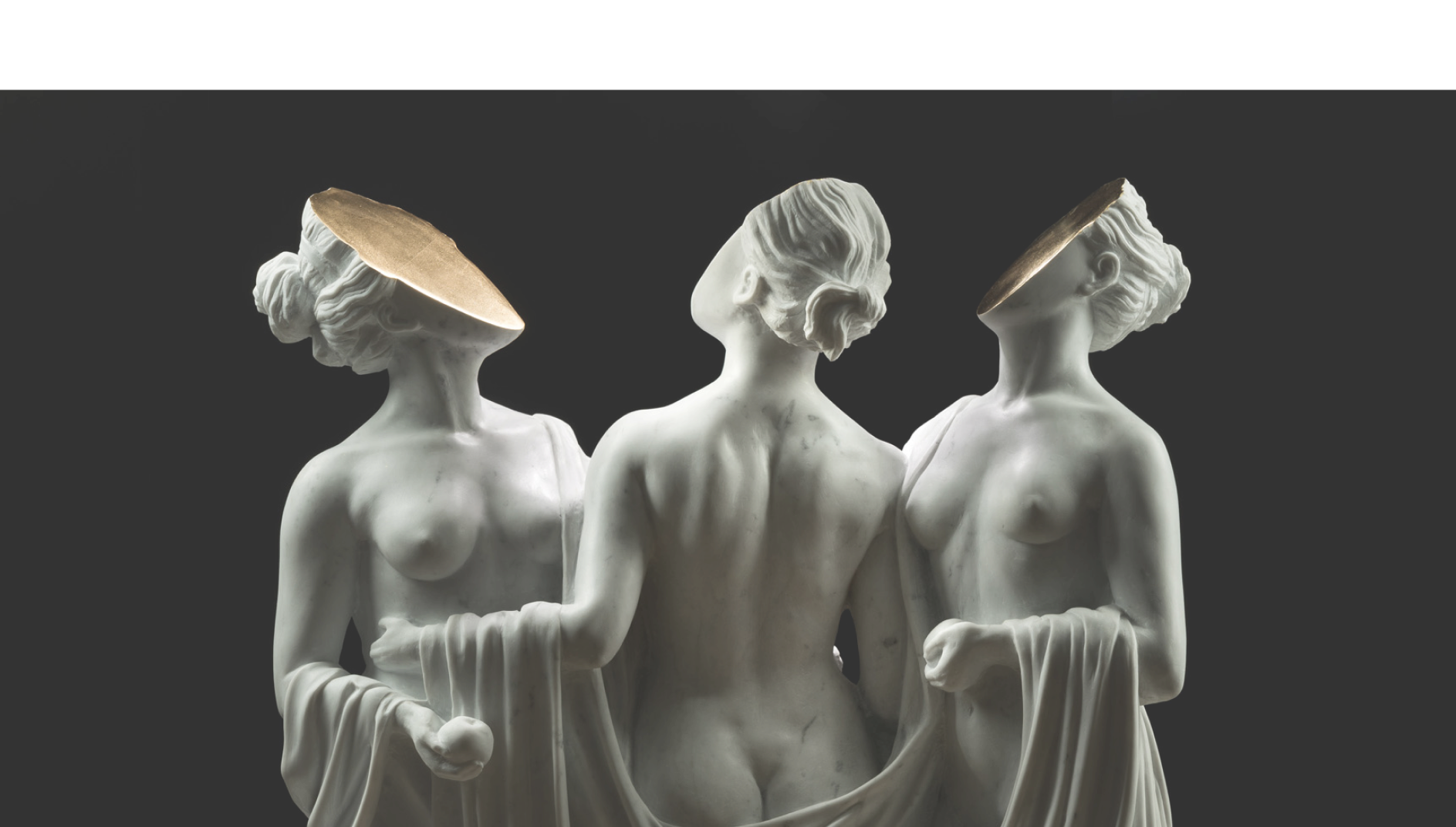
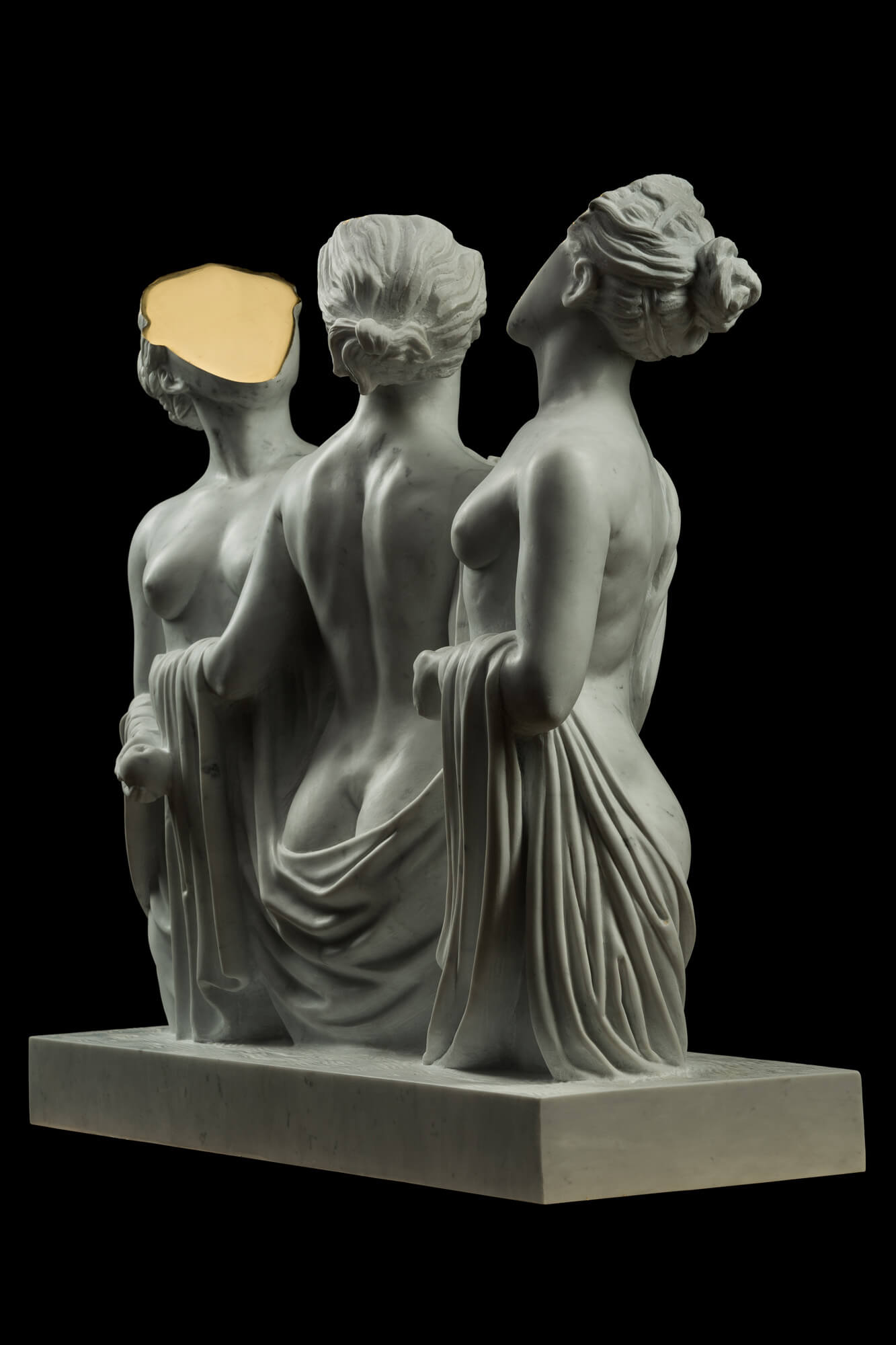
Three graces is a timeless topic taken up by artists in various epochs. We know their performances from the Greeks through Rubens, Canova and many others. They were often an expression of the ideal of the female body and the canon of a given era.
What relationships you have with others?
What are you aiming for in those relationships? Do you care for them? Are they long lasting and meaningful?
Do you engage with them with honesty and awareness?
What sort of man are you? How do you percive a woman? Do you fully accept her complexity?
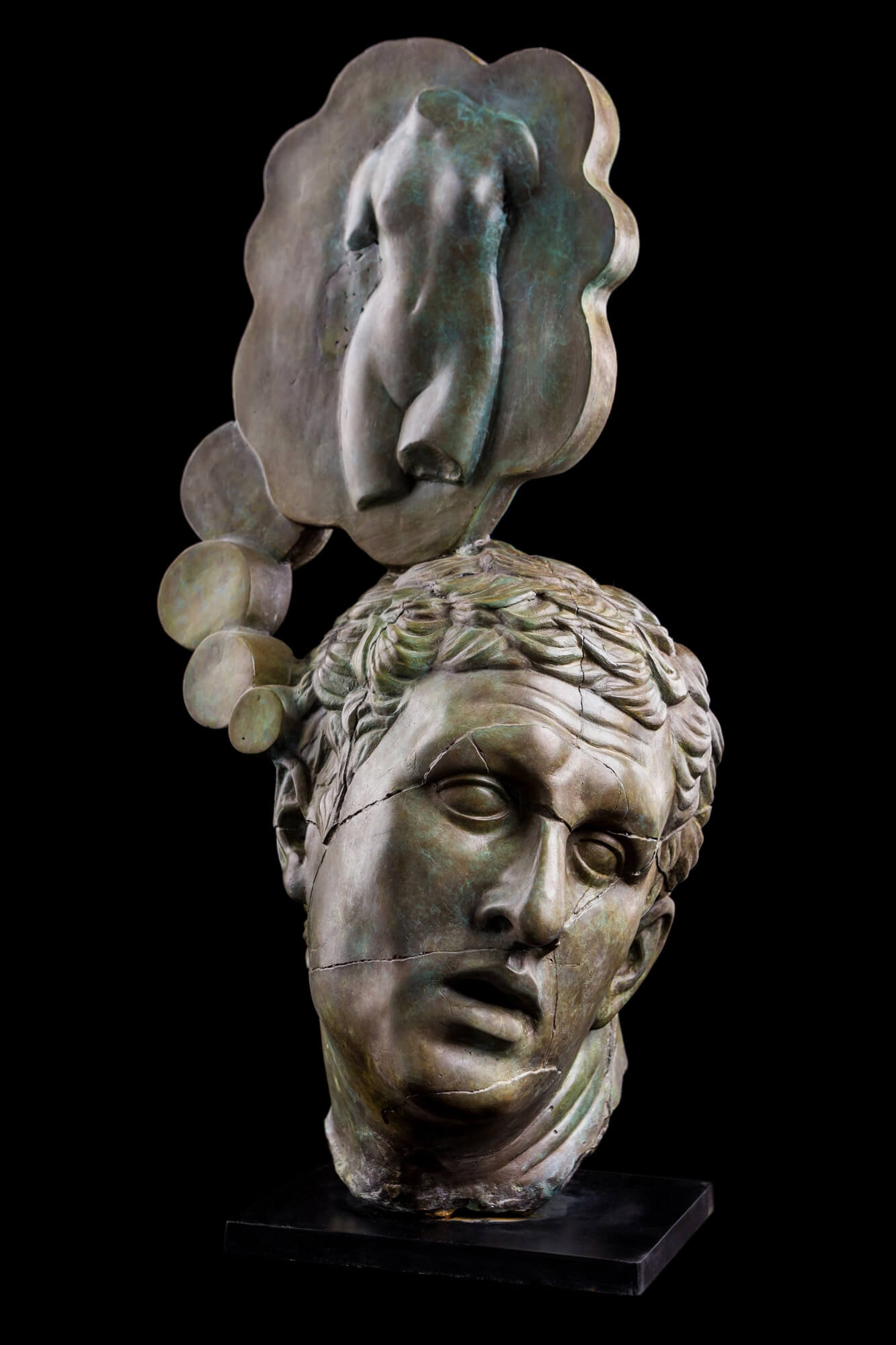
Have you ever dreamed about a body part without thinking about a woman as a whole? Do you find those values important? Or do you only see small fragments, like thought bubbles in a comic book? Have you ever put your eyes on a single bodypart, judging it without realising that it belongs to someone?
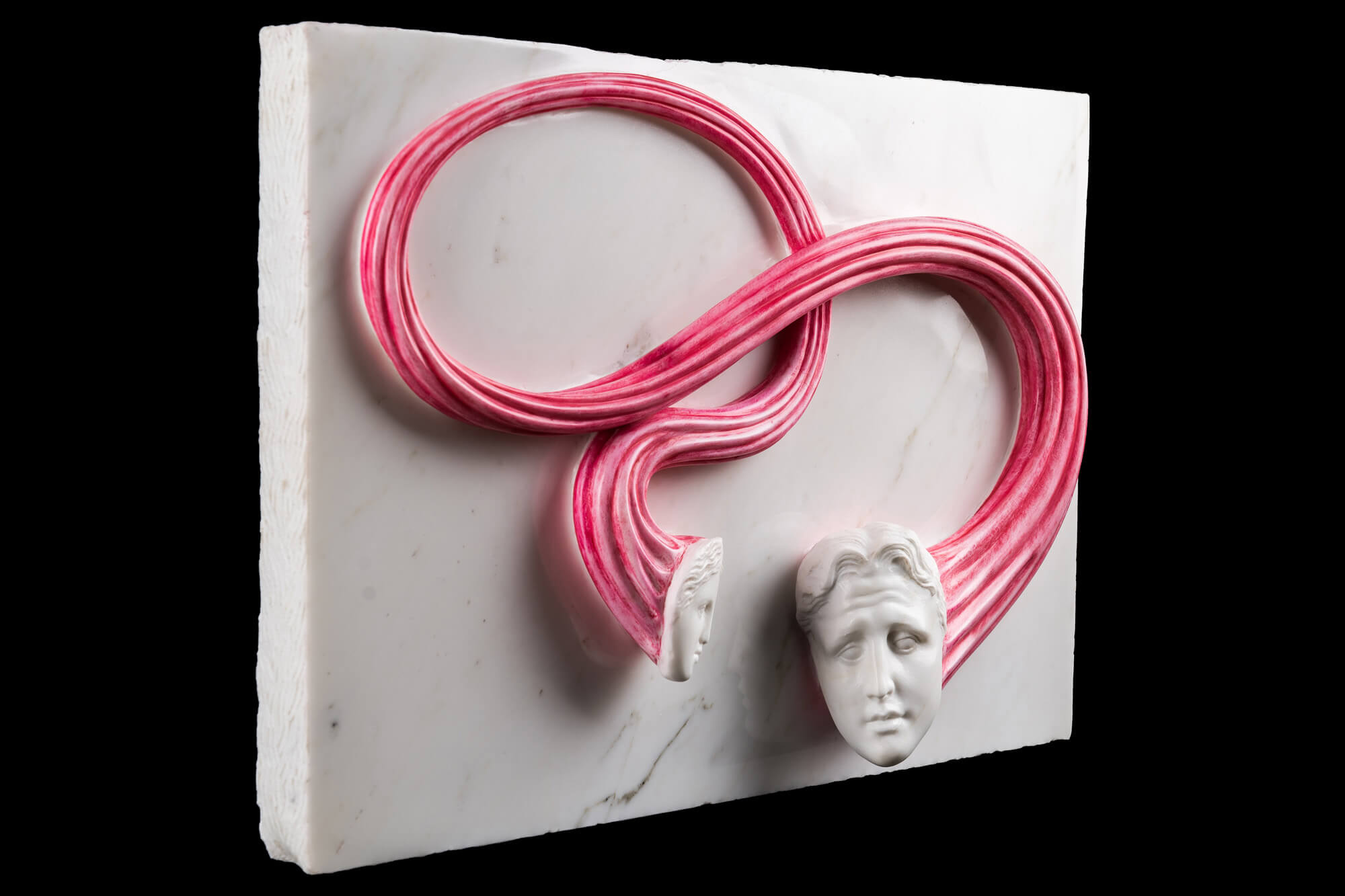
Do you look for your own reflection in another person?
How do you perceive yourself?
Are you your own mirror or do you look for your reflection in other people? What if your mirror is a distorting one and if creating your personality and working on your own progress can only be possible through a relationship with another person?
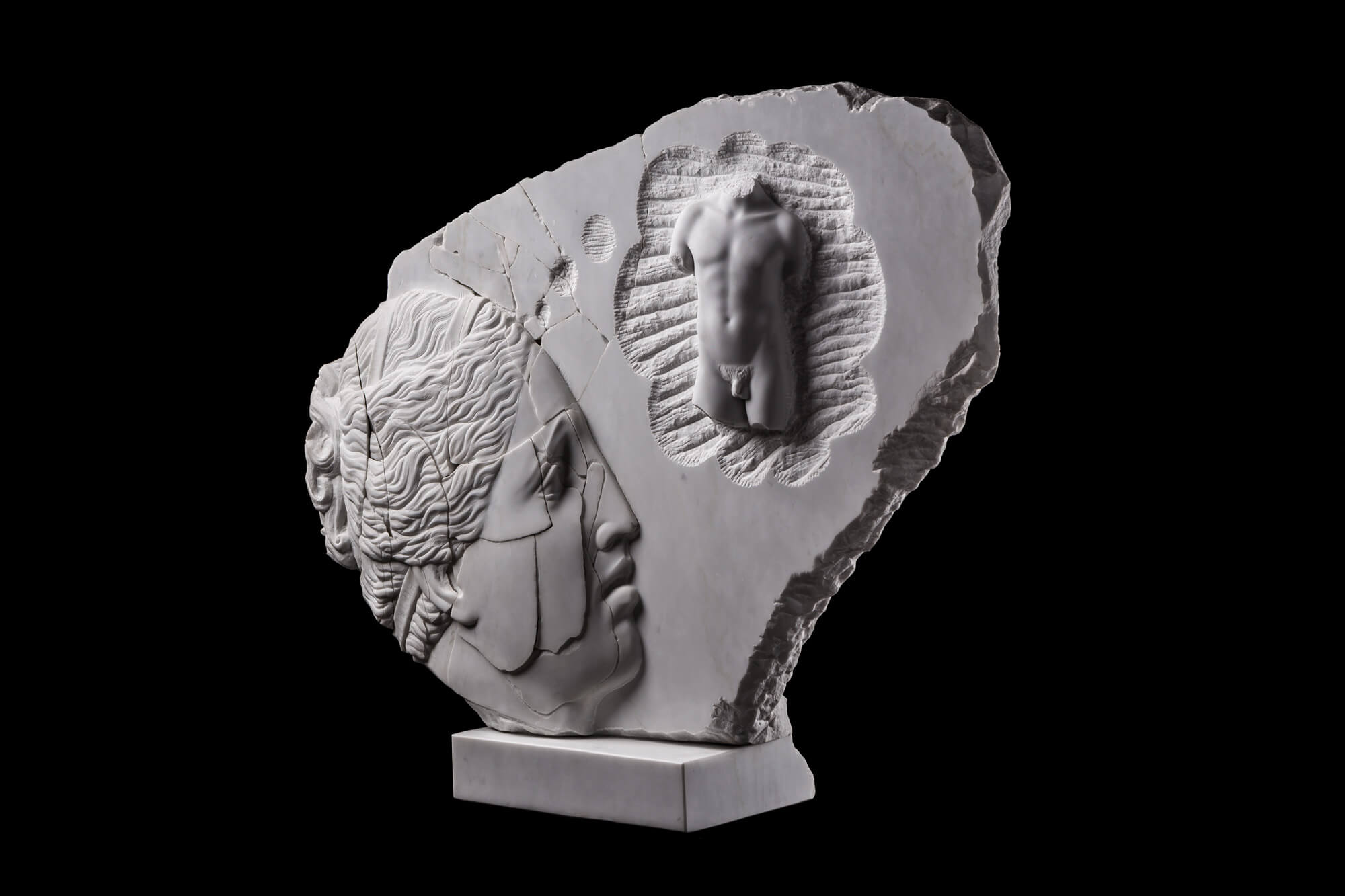
+ Dreaming of him II
Don't we make torsos out of people?
Taking shortcuts without taking them as they are? Whether the relationship with the torso is possible or rather makes everything break in the end. It makes us fall apart.
The sculpture "dreaming of him" was inspired by the painting by Roy Lichtenstein "Thinking of him", my Greek goddess replaced a teary American blonde dreaming about her wealthy gentleman in an elegant suit.
Let this sculpture always reminds us, that all violence is doomed to self-destruction...
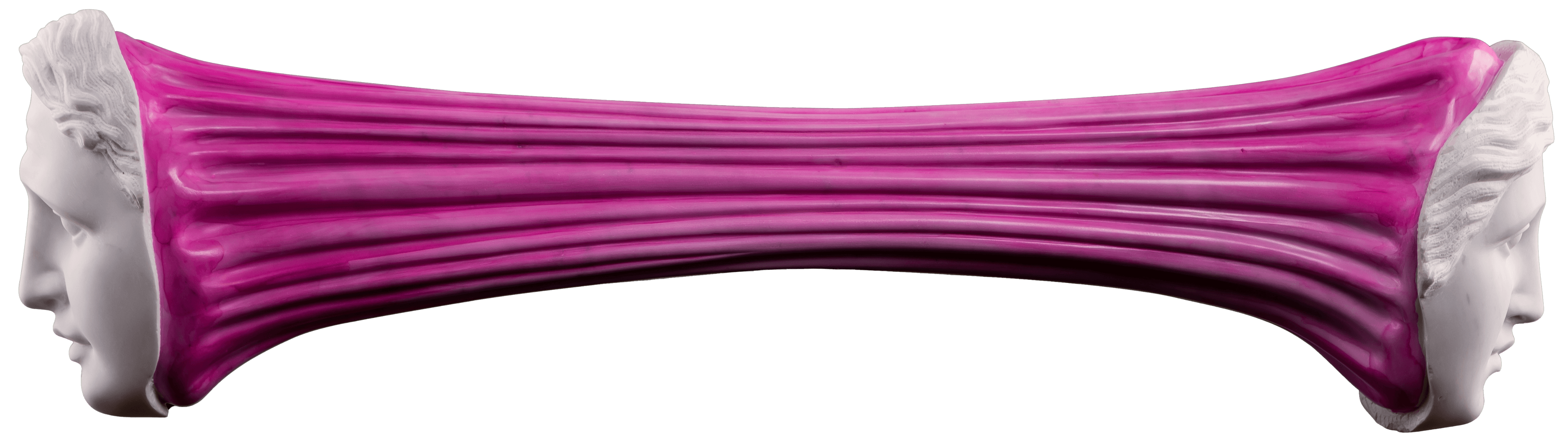
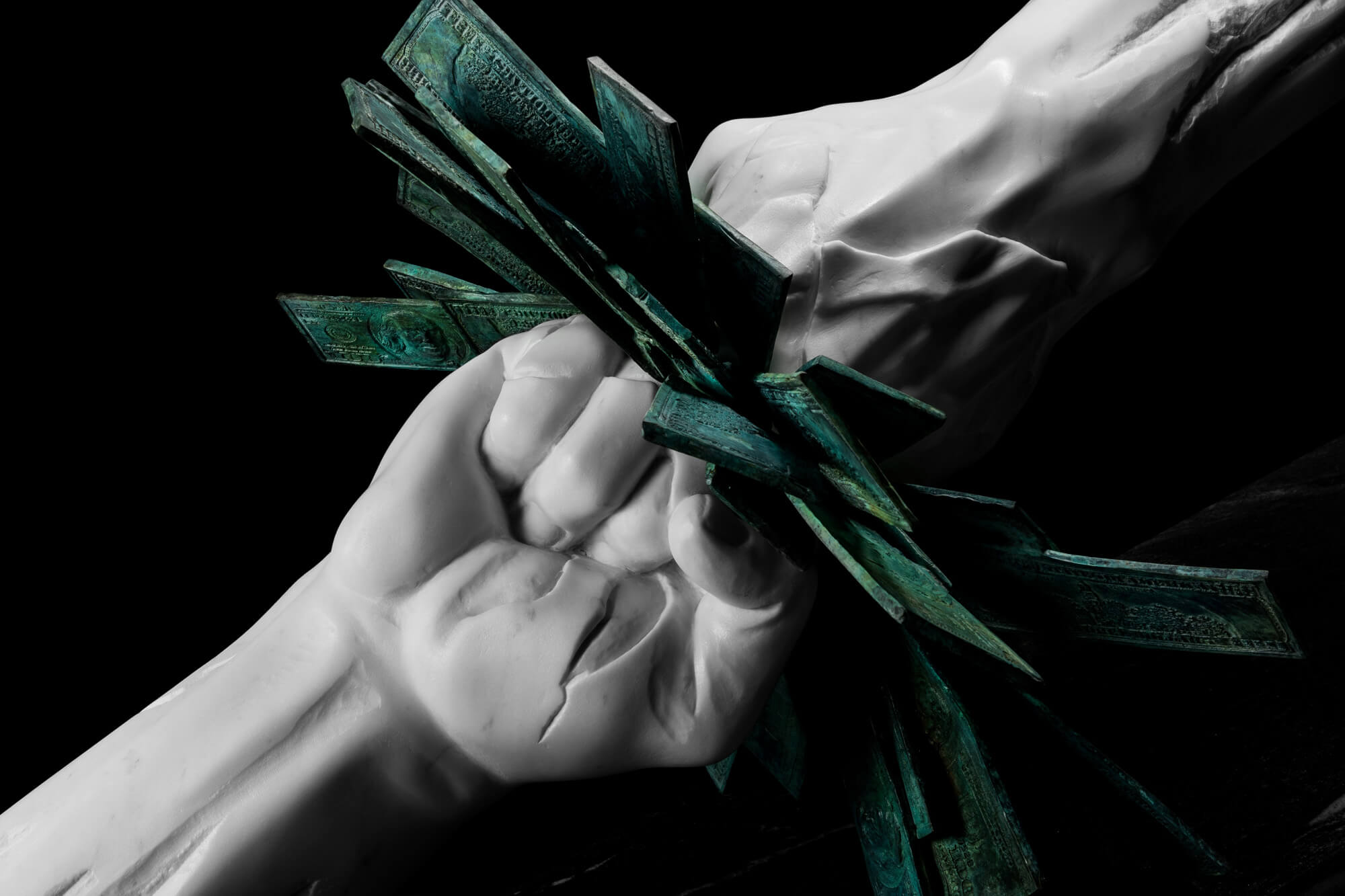
In this sculpture, two hands destined to meet discover not another human being between them, but the sharp embodiment of desire that slices through intention like a blade. The materiality of money grows here like a parasite, reminding us that what we created to serve life so easily becomes its master. And as long as we allow material values to rise between us, we remain strangers to the unburdened touch of existence.
Do you go into the same mainstream river with others?
PL
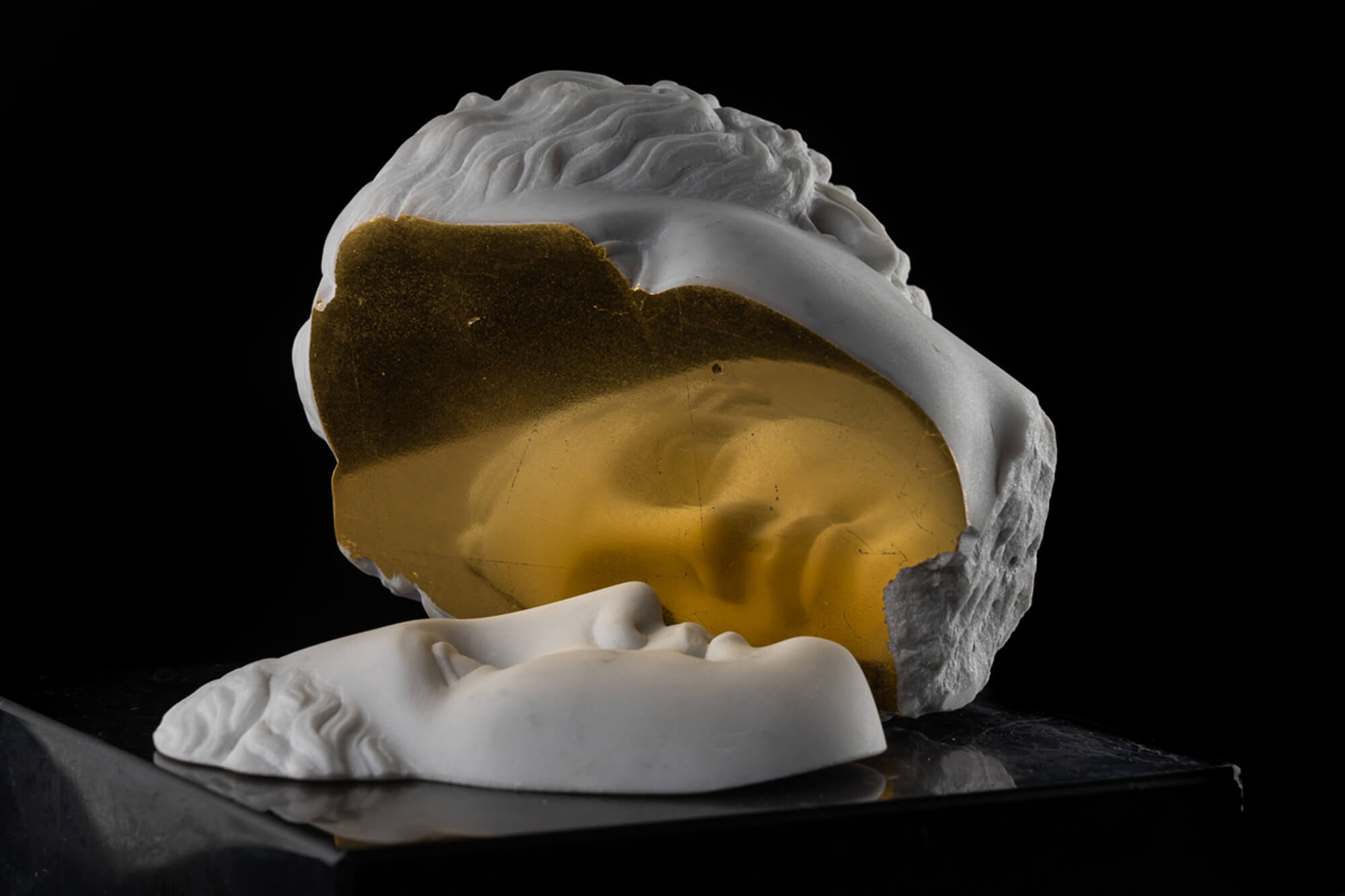
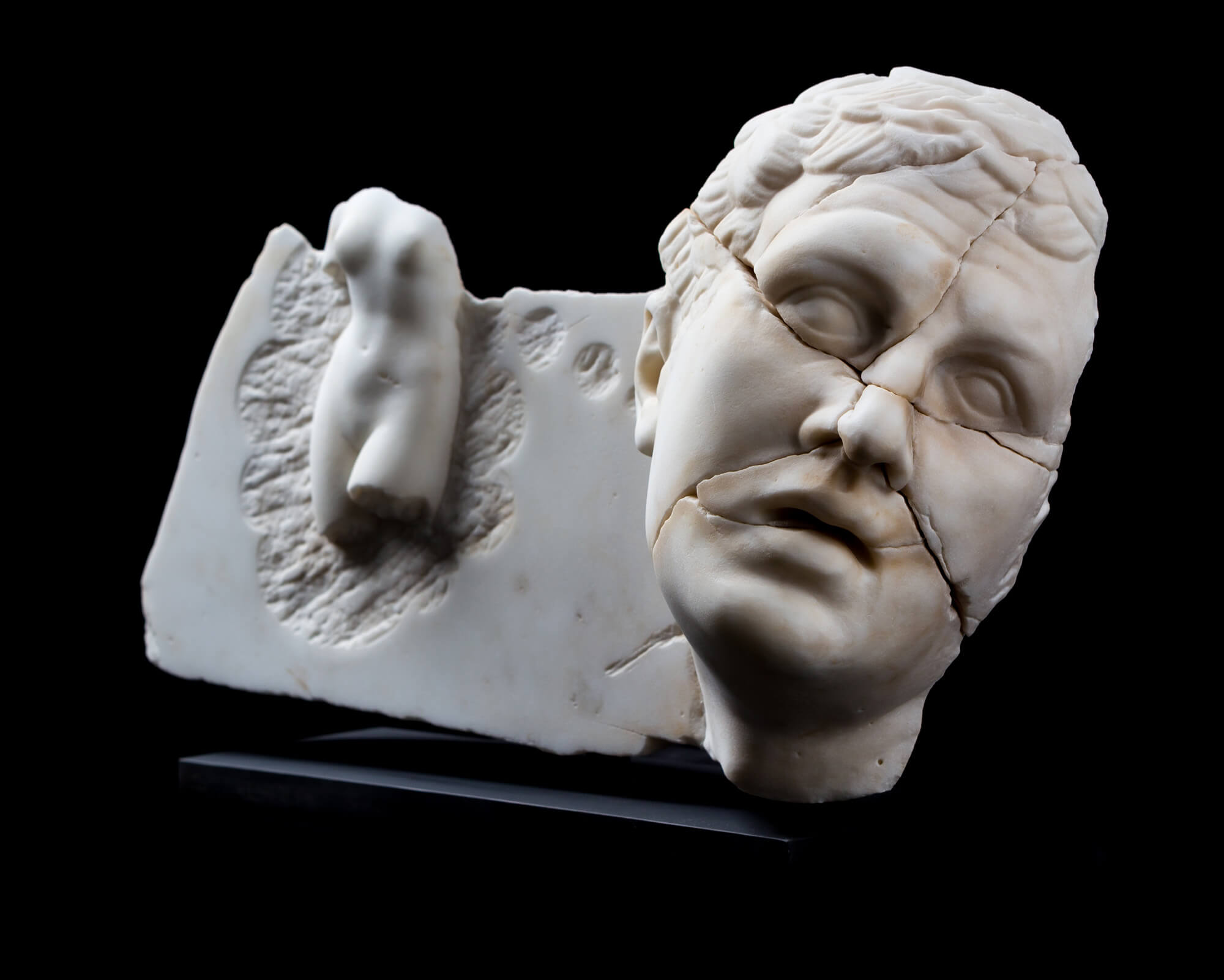
W tej rzeźbie złocista, gładka powierzchnia zastępuje twarz postaci niczym społecznie narzucona maska, która każe odbijać świat zamiast ujawniać własną tożsamość. Leżąca u jej stóp twarz — cicha, pęknięta, odrzucona — sugeruje, że autentyczne „ja” zostaje odłożone na bok, gdy człowiek próbuje sprostać oczekiwaniom otoczenia. Całość tworzy metaforę społeczeństwa, w którym wizerunek zaczyna dominować nad istotą, a poszukiwanie sensu wymaga odwagi, by spojrzeć poza złoty, iluzoryczny refleks.
ENG
In this sculpture, the golden, polished surface replaces the figure’s face like a socially imposed mask, compelling her to reflect the world rather than reveal her true identity. The detached, fractured face lying below suggests that one’s authentic self is often set aside when trying to meet societal expectations. Together, the forms create a metaphor for a culture where image eclipses essence, and where the search for meaning requires the courage to look beyond the shimmering illusion.
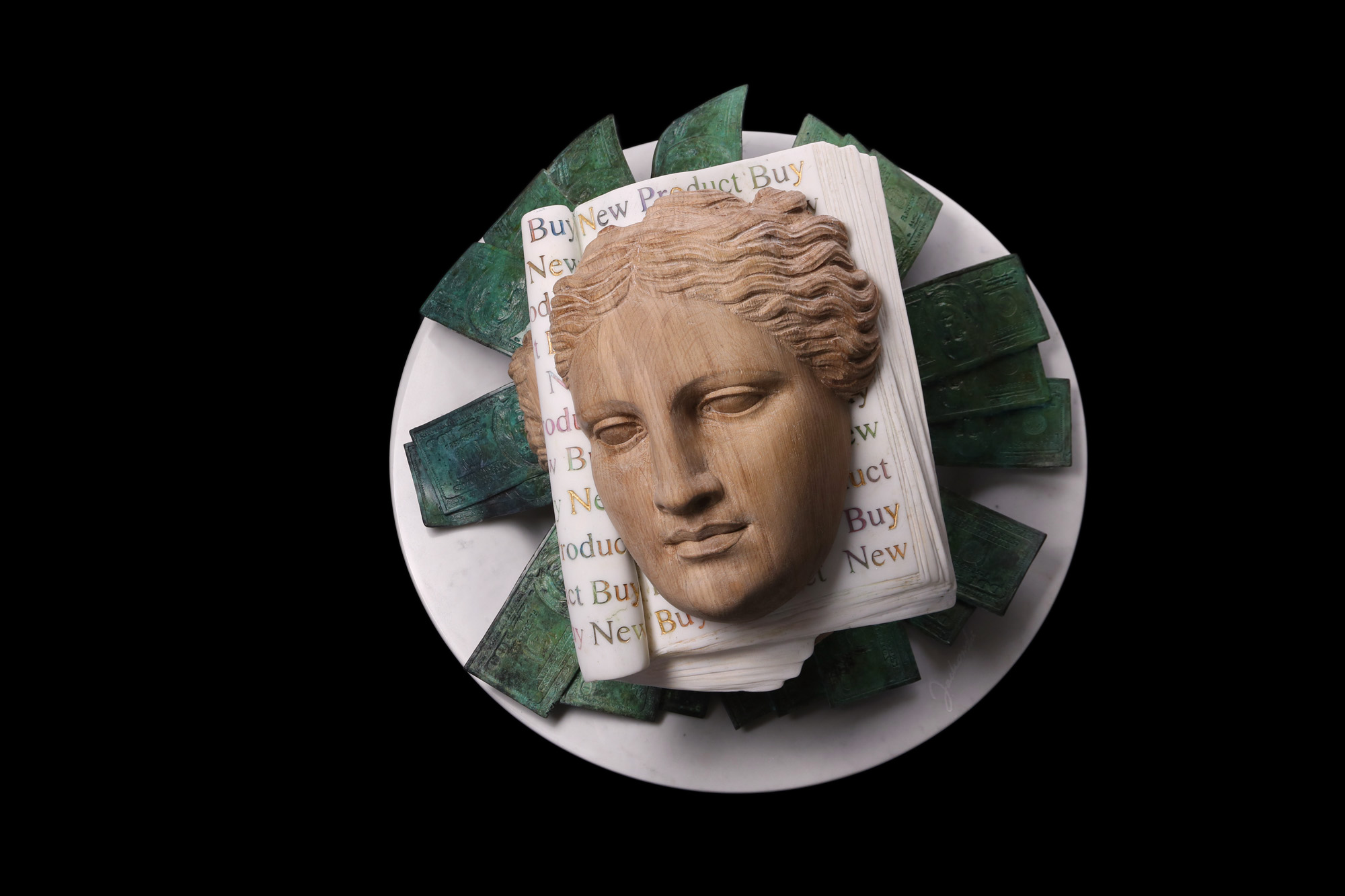
Do you desire something different than a hastily prepared sandwich filled with mass media news and dollars instead of green lettuce?
PL
Rzeźba ukazuje, jak współczesna kultura pochłania informacje, pieniądz i bodźce z taką samą impulsywnością, z jaką sięga po szybkie jedzenie. Ułożone warstwowo banknoty i gazety tworzą metaforę świata, w którym wartości duchowe i intelektualne zostają zastąpione natychmiastową konsumpcją treści i materii. Całość komentuje tempo, w jakim społeczeństwo „połyka” rzeczywistość, nie zostawiając miejsca na refleksję, sens i świadome doświadczenie.
ENG
This sculpture portrays how contemporary society consumes news, money, and information with the same impatience and superficial hunger associated with fast food. The layered banknotes and newspapers form a symbolic “meal,” suggesting that material value and rapid media intake have replaced depth, reflection, and genuine nourishment of the mind. As a whole, the work critiques a culture that devours reality instantly, leaving little room for meaning, contemplation, or conscious engagement.
(Diptych)
What is your relationship with Nature?
Does respect to others reduces agression? Do you feel a part of it? Can you feel mutual interactions? Can being at peace with others be a key to a peaceuful coexistance with nature?
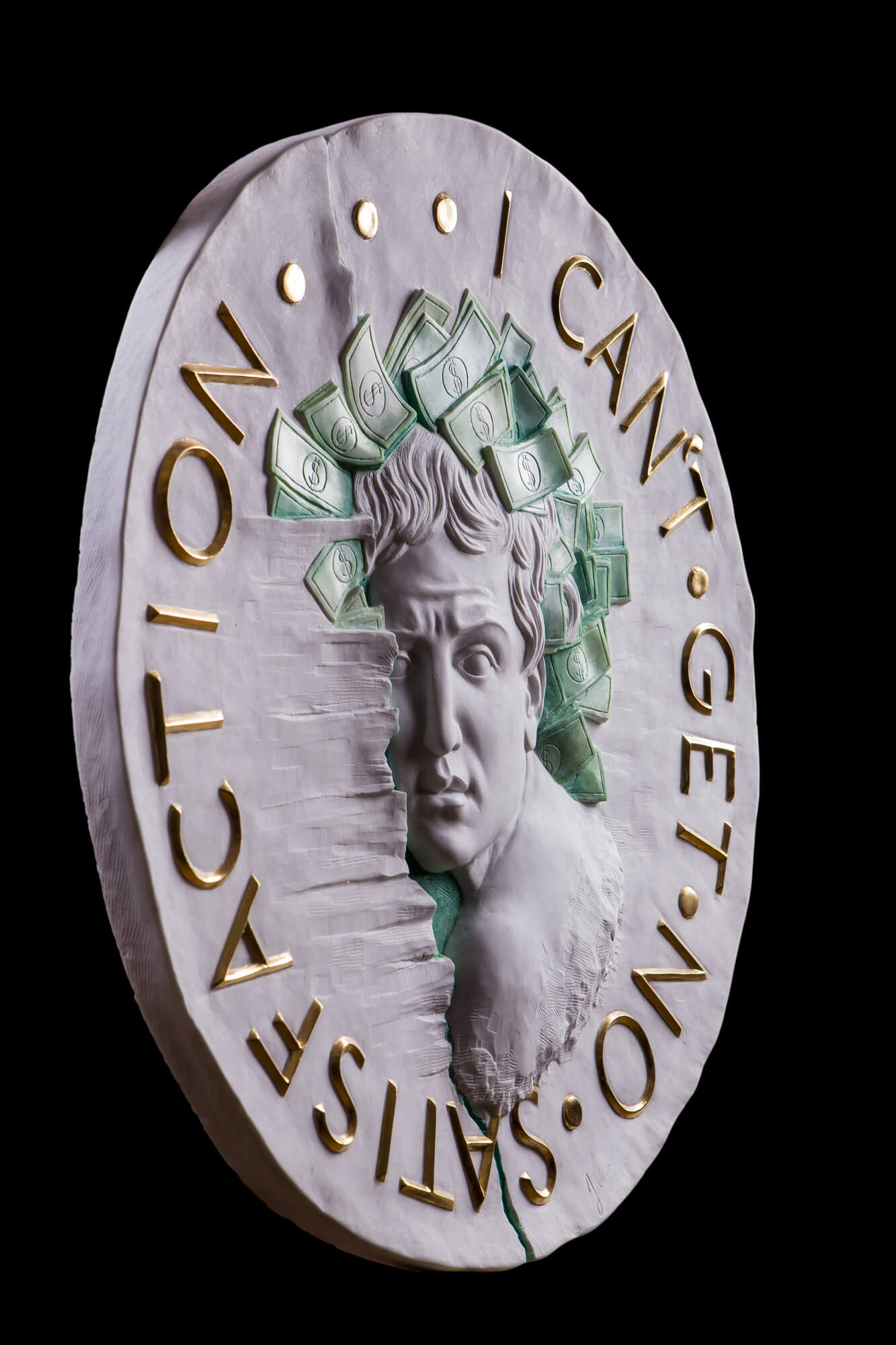
What role does money play in your life? It rules you and is the sole purpose of desire?
PL
Rzeźba przekształca klasyczną formę medalionu w współczesną refleksję nad pragnieniami, ukazując, jak pogoń za bogactwem przenika ludzką świadomość, a mimo to nie potrafi przynieść spełnienia. Napis „I CAN’T GET NO SATISFACTION” staje się wizualnym manifestem wewnętrznego głodu, który rośnie tym bardziej, im intensywniej karmimy go materialnymi ambicjami. Wyrastające z wnętrza motywy pieniężne podkreślają, że w kulturze opartej na akumulacji satysfakcja nie zostaje osiągnięta — lecz stale odsuwana, zastępowana niekończącym się cyklem pożądania „więcej”.
ENG
The sculpture transforms a classical relief into a contemporary meditation on desire, showing how the pursuit of wealth infiltrates the psyche yet never brings the fulfillment it promises. The inscription “I CAN’T GET NO SATISFACTION” becomes a visual echo of an inner hunger that grows the more it is fed by material ambition. As money bursts from within the figure’s head, the work suggests that in a culture driven by accumulation, satisfaction is not achieved but continually postponed — replaced by an endless cycle of wanting more.
quiet passage between inner dream and infinite cosmos, where the closed eye becomes a threshold through which the soul drifts into its own boundless, oceanic depth
PL
Rzeźba Sogno del Mare ukazuje twarz pogrążoną w spokojnym, wewnętrznym śnie, podczas gdy jej druga połowa otwiera się na bezkresną przestrzeń usianą gwiazdami — jakby granica między człowiekiem a kosmosem rozpuściła się w marzeniu. Zamknięte oko sugeruje podróż w głąb siebie, gdzie pamięć, intuicja i wyobraźnia splatają się w rytmie fal. Dzieło staje się metaforą snu, w którym morze symbolizuje nieograniczoną przestrzeń ludzkiej duszy, a nocne niebo — nieskończone możliwości jej wewnętrznych światów.
ENG
The sculpture Sogno del Mare presents a serene face drifting into an inner dream, while its dark, star‑dotted counterpart opens toward an infinite, cosmic expanse. The closed eye suggests a descent into memory, intuition, and the quiet tides of the subconscious, where inner worlds unfold like waves. As a whole, the piece becomes a metaphor for a dream in which the sea represents the boundless depth of the human soul, and the night sky symbolizes the limitless possibilities held within it.
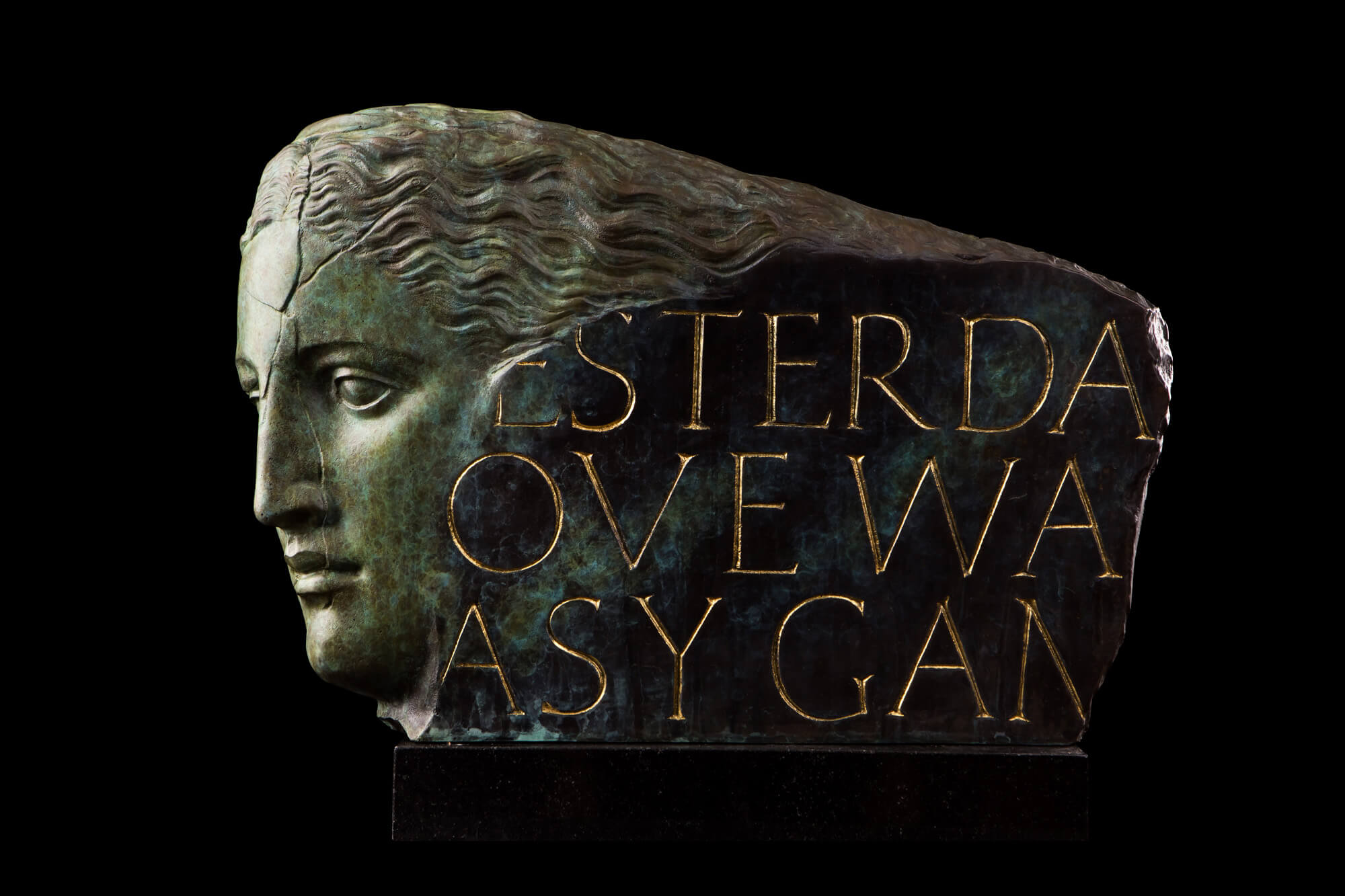
The sculpture captures a moment in which solid form seems to soften into a breath, suggesting that even in stillness the human spirit is moved by subtle, almost imperceptible currents of inner life.
PL
Brezza uchwyca moment, w którym materia zdaje się reagować na niewidzialny powiew — jakby ciężki brąz na chwilę przyjął właściwości powietrza. Delikatne wychylenie formy i subtelna dynamika powierzchni sugerują obecność wewnętrznego ruchu, tego krótkiego impulsu, w którym człowiek otwiera się na świat, a świat dotyka go swoją lekkością. Dzieło staje się metaforą ulotnych, niemal niezauważalnych doświadczeń: tych, w których czujemy się żywi nie dlatego, że coś widzimy czy posiadamy, lecz dlatego, że coś przemknęło przez nasze istnienie jak oddech.
ENG
The sculpture Brezza captures a moment in which solid material appears to respond to an invisible movement, as though a gentle breeze has passed across its surface and momentarily softened its weight. The subtle curvature and nuanced texture evoke an inner shift — a quiet breath, a fleeting awareness — suggesting that even the most minimal fragment of the human form can express profound emotional presence. Ultimately, the work becomes a metaphor for those delicate, almost imperceptible experiences that shape us: the moments in which life is felt not through what is seen, but through what lightly touches our inner world like air.
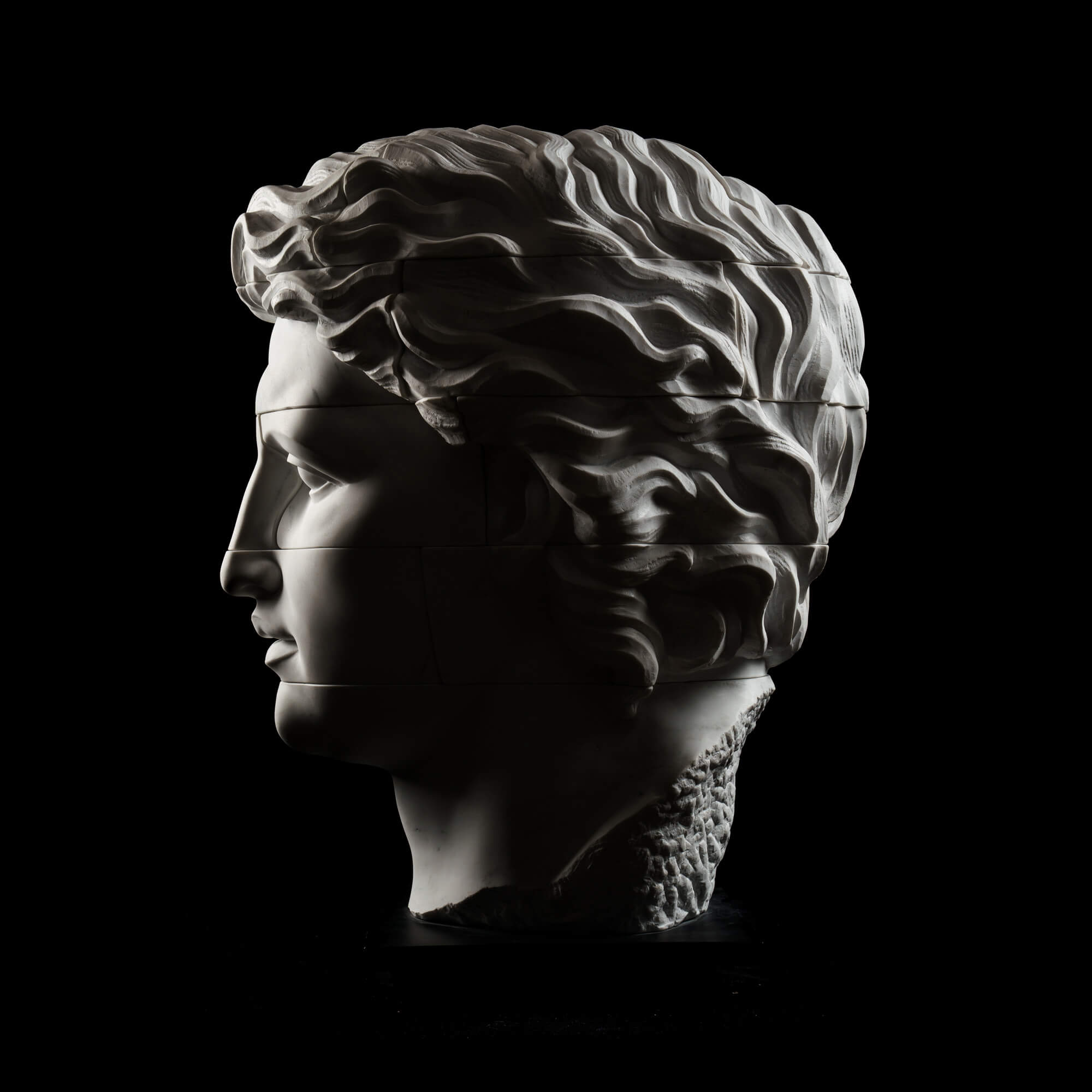
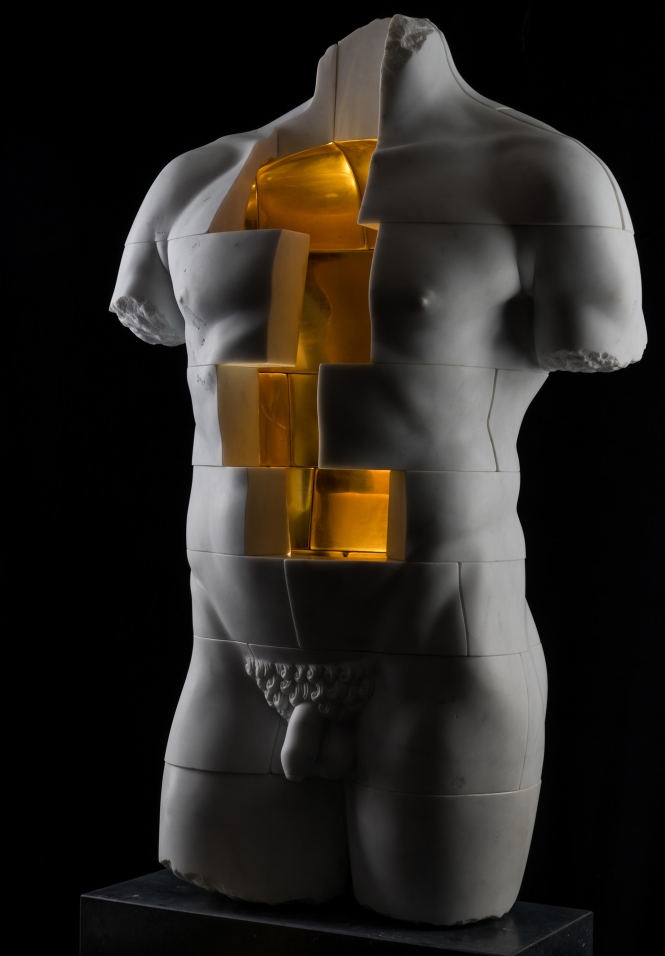
Body Facade reveals the human form as a layered construct, suggesting that true identity emerges only when we look beyond the polished exterior and into the fractured openings that hint at our inner truth.
PL
W pociętym, segmentowanym torsie uwidacznia się idea ciała jako fasady — struktury, którą społeczeństwo nieustannie kształtuje, warstwami ukrywając i odsłaniając różne aspekty ludzkiej tożsamości. Złote wnętrza sugerują, że pod pozornie chłodną, klasyczną formą kryje się wartość bardziej duchowa niż materialna, dostępna dopiero wtedy, gdy człowiek odważy się przekroczyć własne powierzchnie. Cała rzeźba staje się metaforą poszukiwania autentyczności, w której prawda o człowieku ujawnia się dopiero poprzez przełamywanie narzuconych form i odsłanianie tego, co wewnętrzne, kruche, a zarazem najcenniejsze.
ENG
In this segmented torso, the body becomes an architectural façade—carefully constructed, divided, and exposed to reveal that identity is never a single, solid form but a layered structure shaped by experience and expectation. The golden interiors suggest an inner luminosity, implying that the true value of a person lies beneath the visible surface, waiting to be acknowledged amid the fractures. As a whole, the sculpture becomes a meditation on authenticity, showing that meaning emerges only when we dare to look inside ourselves rather than remain confined to the forms imposed upon us.
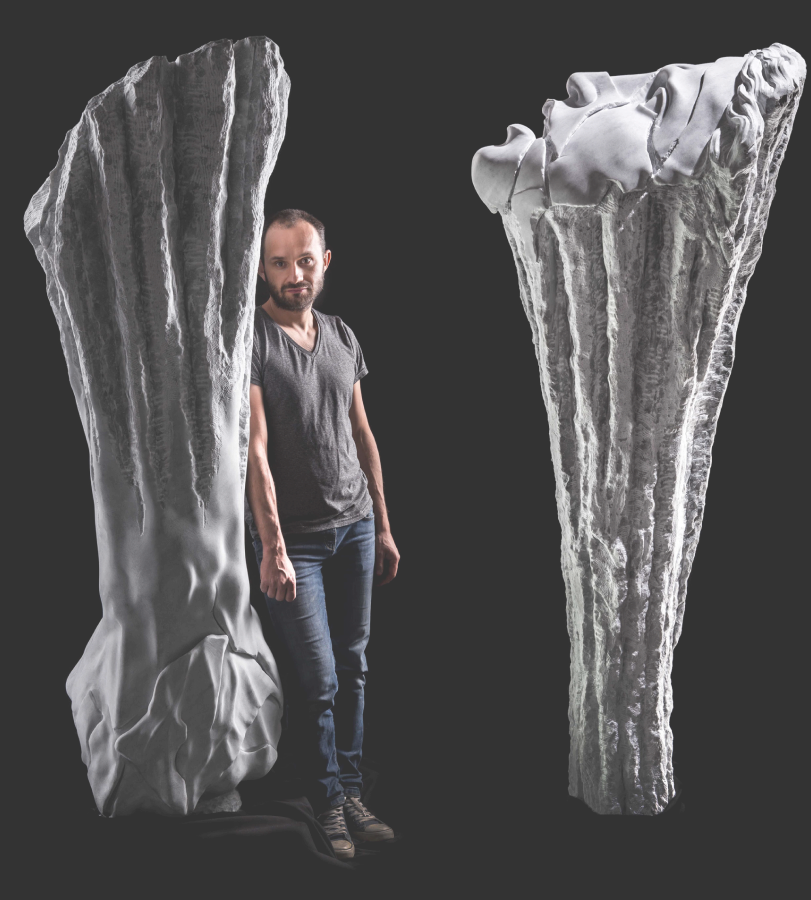
he sculpture expresses hope as an act of becoming — a steady emergence from what we were into what we are capable of becoming
PL
Rzeźba HOPE ukazuje postać wyłaniającą się z surowego bloku, jakby rodziła się z niedokończonej materii, przechodząc od ciężaru ku lekkości. Kontrast między chropowatą strukturą kamienia a gładką, wznoszącą się formą symbolizuje ludzką drogę od ograniczeń do możliwości, od determinacji do aspiracji. Pionowy układ dzieła nadaje mu charakter siły i wzrostu, sugerując, że nadzieja jest ruchem w górę — nawet wtedy, gdy fundament pozostaje nieidealny.
ENG
The sculpture HOPE presents a figure emerging from a rough, unrefined block, as if rising from the inertia of raw matter toward a more conscious, awakened state. The contrast between the fractured stone and the smooth, ascending form symbolizes the human journey from limitation to aspiration, from confinement to possibility. The verticality of the piece evokes resilience, suggesting that hope is not an emotion of escape but a force that pushes upward even when its foundations remain imperfect and unfinished.
PL
Michał Jackowski (ur. 1978, Białystok) — rzeźbiarz i artysta interdyscyplinarny, którego twórczość bada napięcie między materialnością a poszukiwaniem sensu. Absolwent Akademii Sztuk Pięknych w Warszawie (dyplom magisterski, 2003), tworzy język artystyczny oparty na klasycznej formie, zderzając ją ze znakami współczesności: pieniądzem, systemami wartości oraz egzystencjalnymi pytaniami o cel i znaczenie.
Nawiązuje do filozofii logoterapii, wskazującej, że sens nie tkwi w posiadaniu, lecz w odpowiedzialności, relacji i autentycznej intencji.
Jackowski pyta, co pozostaje z człowieka, gdy świat materialny wyrasta między nami, oraz jakie formy rodzą się wtedy, gdy próbujemy odzyskać to, co istotne.
W 2017 roku jego cykl Antique Games został zaprezentowany na Florence International Art Biennale, gdzie zdobył dwie nagrody.
W 2018 prace artysty prezentowano w Londynie, Zurychu, Como oraz podczas ArtBaselWeek w Bazylei.
W 2019 zdobył dwie nagrody na Artrooms Roma, znajdując się wśród 40 artystów wyłonionych przez międzynarodowe jury spośród ponad 1000 zgłoszeń. W tym samym roku zaprezentował polską rzeźbę współczesną na Scope International Art Exhibition w Miami podczas ArtBasel Miami Week.
W 2022 roku reprezentował Polskę na NordArt 2022 w Büdelsdorfie w Niemczech — jednym z największych europejskich przeglądów sztuki współczesnej — zdobywając Nagrodę Publiczności.
Dziś jego twórczość łączy to, co antyczne, z tym, co nowoczesne; to, co namacalne, z tym, co egzystencjalne. To ciągła refleksja nad tym, jak pogoń za wartością kształtuje ludzką duszę i w jaki sposób sztuka może przywracać sens tam, gdzie świat pozostawia pęknięcie.
ENG
Michał Jackowski (born 1978, Białystok, Poland) — sculptor and interdisciplinary artist whose work explores the tension between materiality and meaning.
A graduate of the Academy of Fine Arts in Warsaw (MA, 2003), Jackowski builds his artistic language on classical sculptural forms, confronting them with the symbols of contemporary existence — currency, value systems, and the human search for purpose.
He resonates with the philosophical perspective of logotherapy — the belief that meaning is not found in possessions but in responsibility, relationship, and authentic intention.
Jackowski’s art asks what remains of us when the material world grows between us, and what new forms emerge when we try to reclaim the essential.
In 2017, his series Antique Games was presented at the Florence International Art Biennale, earning two awards.
In 2018, his works were showcased in London, Zurich, Como, and during ArtBaselWeek in Basel.
In 2019, he received two awards at Artrooms Roma, being selected as one of 40 artists chosen from over 1,000 applicants, and later represented Polish contemporary sculpture at Scope International Art Exhibition in Miami during ArtBasel Miami Week.
In 2022, Jackowski represented Poland at NordArt 2022 in Büdelsdorf, Germany — one of the largest exhibitions of contemporary art in Europe — and received the Public Choice Award.
Today, his work continues to bridge the ancient and the modern, the tangible and the existential: an ongoing reflection on how the pursuit of value shapes the human soul, and how art can restore meaning where the world has created fracture.

With sculptor Michał JackowskiI meet him in his Białystok studio, which he is rather reluctant to open to visitors. We…
read »
In one of his essays, the British writer Gilbert Keith Chesterton observed: There is no such thing as an uninteresting…
read »
One of my most recognizable cycles is the “Antique Games” series, presented at numerous international exhibitions, including the International Art…
read »send an inquiry
m: +48 609498528
e: office@jackowskiart.com
Michał Jackowski ul. Św. Krzysztofa 20 15-698 Bialystok, Poland
Gallery representation:
[GB] Informacja o dofinansowaniu
[GB] Dofinansowanie w ramach Programu Operacyjnego Polska Wschodnia
Firma Pracownia Jackowski Michał realizuje projekt dofinansowany z Funduszy Europejskich Program Operacyjny Polska Wschodnia, oś priorytetowa 1 Przedsiębiorcza Polska Wschodnia, działanie 1.2 Internacjonalizacja MŚP, pn. „Internacjonalizacja w firmie Pracownia Jackowski Michał” nr projektu POPW.01.02.00-20-0034/22
Celem projektu jest przygotowanie firmy do wdrożenia MBI Internacjonalizacji, który zapewni zwiększenie aktywności gospodarczej Wnioskodawcy na rynkach międzynarodowych.
Efektem końcowym będzie:
- wzrost poziomu sprzedaży,
- zwiększenie konkurencyjności firmy,
- dywersyfikacja przychodów,
- uatrakcyjnienie oferty handlowej,
- rozwój kadry, poprzez powierzenie jej nowych zadań
Wartość projektu : 628 234,80 PLN
Wkład Funduszy Europejskich: 417 231,00 PLN
